News

Best Practices for Records & Documents Protection for Funeral Homes

Best Practices for Records & Documents Protection for Funeral Homes

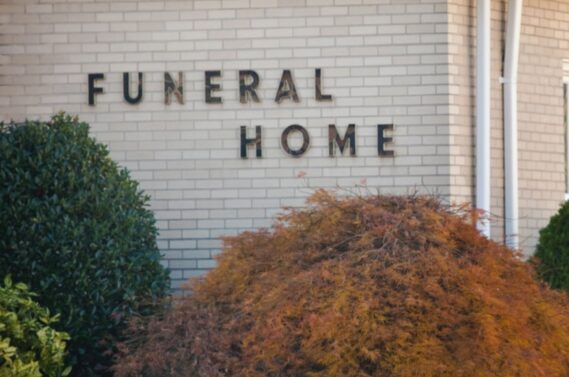
Many funeral homes are small, family-owned operations that have been in business for many generations. Given those circumstances, even the most modest of facilities can house a wealth of documents, certificates, and local genealogical history that is irreplaceable in the event of a disaster. With historical records, the family funeral home often acts as a repository for the last surviving documents that relate to ancestral loved ones.

Read moreabout Best Practices for Records & Documents Protection for Funeral Homes

Vital Records Protection Best Practices for Insurance Agencies

Vital Records Protection Best Practices for Insurance Agencies

A non-fireproof cabinet in an insurance agency is not completely inappropriate for all situations. For example, files with non-current information, otherwise known as “dead files” can be stored in regular cabinets or destroyed in a proper manner. Also, anything that is easily replaceable can be kept in non-fireproof cabinets; however even what seems to be replaceable before a fire, flood or other disaster, can prove to be quite a challenge to restore afterward.

Read moreabout Vital Records Protection Best Practices for Insurance Agencies

How Aetna’s Corporate Headquarters Prepares for Disaster

How Aetna’s Corporate Headquarters Prepares for Disaster

It’s a well-established fact that no matter how well thought out a business plan is, just one disaster – fire, flood, major theft or other unexpected occurrences – can erase all profits and cause a business to fail. Perhaps more than any other type of enterprise, insurance companies are well aware of the pitfalls and risks businesses face today.

Read moreabout How Aetna’s Corporate Headquarters Prepares for Disaster

Vital Records Best Practices for Colleges and Universities
Vital Records Best Practices for Colleges and Universities

American colleges and universities have the unique responsibility to educate our future professionals. Doctors, lawyers, politicians, statisticians, computer programmers, advertising executives – you name it, the most important and high-paying professions are filled with candidates who graduated from an institution of higher learning. These institutions are places of learning, but first and foremost, they are businesses.

Read moreabout Vital Records Best Practices for Colleges and Universities

Vital Records Best Practices for Law Firms

Vital Records Best Practices for Law Firms

“It is fair to assume that if a law firm does not take action to protect client’s files, then they are liable for that loss.” Executive Michael Platts, Charles R. Tutwiler and Associates Fire can be devastating almost anywhere it...

Read moreabout Vital Records Best Practices for Law Firms

Vital Records Best Practices for Libraries

Vital Records Best Practices for Libraries

Since ancient times, with the famous loss of the world’s largest archive of knowledge – the burning of the great Library of Alexandria – libraries have been at special risk to fire-related catastrophes. Disaster could strike at any time, destroying documents and archives in your library facility. It is often the responsibility of the local librarian to maintain a community’s heritage and records. It is also the responsibility of these individuals to ensure that they have implemented effective procedures to minimize the effects of a disaster.

Read moreabout Vital Records Best Practices for Libraries

Fire Protection Best Practices for Lumber Yards
Fire Protection Best Practices for Lumber Yards

The National Fire Protection Association has developed a formula to gauge the hazard associated with a potential industrial fire at a specific type of business. Using the formula, each type of business is assigned an “occupancy hazard number” which ranges from 3 through 7, with the occupancies with the greater hazards receiving lower classification numbers.

Read moreabout Fire Protection Best Practices for Lumber Yards

Vital Records Best Practices for Government Employees

Vital Records Best Practices for Government Employees

Vital records protection is essential to ensure that the details of the past are not destroyed, forgotten, discarded or altered. Business records such as titles, contracts, lease agreements, financial statements and many other important documents need to be protected against fire, flood and other types of disasters. Personal records that may include insurance policies, deeds to land rights, or even family photos or negatives should also be protected from destruction by the best possible means. One especially important type of document that needs 100% protection is a governmental document. All levels of the government should be prepared as best as possible to protect our vital public records.

Read moreabout Vital Records Best Practices for Government Employees

Vital Records Best Practices for Museums and Historical Societies

Vital Records Best Practices for Museums and Historical Societies

Preserving items from the past to show future generations the successes and failures of their elders is a great way to provide an interesting history lesson for all who are interested. The world’s museums and historical societies are places where the details of yesteryear are collected, restored, and guarded for everyone to appreciate. Exhibits can be as simple as a desk from the first schoolhouse in the town the museum is located, or as complex and fascinating as the device used by the Wright Brothers to become the “first in flight” in Kitty Hawk, NC. Regardless of the nature or value of the display, all museums and historical societies share a unique responsibility when it comes to protecting important items from fire, flood, theft, or other disasters.

Read moreabout Vital Records Best Practices for Museums and Historical Societies